What a Cuban Dance Company, Mountain Dew, and Hamilton Have Have in Common
When the season lineup landed in my inbox…
When the season lineup landed in my inbox, my stomach dropped a little.
Lizt Alfonso Dance Cuba was on the schedule for early October — right out of the summer slump. A time of year when people are still adjusting to their fall routines and organizations are fighting for every single ticket sale.
The company blended flamenco, ballet, and contemporary dance with Afro-Cuban rhythms. This sounded sounded awesome if you deeply love dance.
But would someone who casually attends arts performances and happens to browse our website over their morning coffee see "Afro-Cuban rhythms" and think: “Yes, that's worth a babysitter, parking, and $90”?
I wasn't sure.
It wound up selling very well
Over the next several seasons, Cuban-themed performances kept drawing strong houses. Havana Blue, a collaboration between Orbert Davis' Chicago Jazz Philharmonic and River North Dance Chicago, packed the house. A program where Chicago Jazz Philharmonic brought 34 students and faculty from Havana's national conservatory to perform on the Auditorium stage was exceptionally full and the energy in the room stands out against the countless shows I’ve experienced.
There was something more to the success. This was part of a trend.
In 2009, the Obama administration announced that they would begin authorizing musical exchanges with Cuba. Meanwhile, diplomats worked on normalizing relations in secret. Havana's music festivals became an unlikely meeting point for American and Cuban artists for the first time in decades.
In December 2014, when the White House announced the full restoration of U.S.-Cuban diplomatic relations, American interest in Cuban culture reached a fever pitch. Collectors, audiences, and presenters who had been watching the signals were already in motion and many had business plans.
Arts organizations that were paying attention to what was happening culturally (not just what was on their current season) found themselves in the right place at the right time.
It’s Trend Tethering or the practice of identifying where culture is already moving — through social shifts, economic pressures, pop culture moments, and national conversations — and anchoring your marketing and programming to it intentionally.
This is Part one of two posts. Here we'll cover the why and the what. Part 2 is the how, or a practical framework for spotting trends before they peak.
First, what’s a trend vs fad?
Before we go further, it helps to review the difference between a trend and a fad. They’re not the same thing and people often throw trend around the internet these days.
A trend is a long-term, gradual shift in behavior, culture, or style. It has lasting impact and addresses an underlying need. The internet, loneliness epidemic, and AI are all trends. These only deepen with time.
A fad is a short, intense burst of popularity driven by novelty. The ALS ice bucket challenge, butter boards, and the recent pushback to Timothee Chalomet’s comments about ballet and opera were all fun while they lasted.
People usually don’t connect that a fad is usually a feature of a much larger trend.
Sourdough bread baking swept the country in 2020 because people were craving comfort, control, and small rituals during a period when both felt impossible to find. This faded away, but the need for comfort underneath it has not.
Dupe culture or the Gen Z TikTok-driven habit of finding affordable alternatives to luxury goods isn’t about beauty products or designer bags. It’s about the fact that everything costs more and people need to find creative ways to maintain their lifestyles.
Trends Don't Start With Products. They Start With People.
The emotional case for why trends spread before you get into any framework.
People adopt new things because something in their life or their culture has shifted. They start to look for behaviors, products, and services that fit their new reality.
The most iconic, longlasting brands tap into where people are at the time and what they want to be and the cultural tensions between the gap and adjust their marketing and product development while still keeping their same ethos.
They identify a widespread anxiety or tension in the culture — something lots of people feel but can't fully articulate — and position themselves as a response to it.
The Corporate Version: Mountain Dew
Mountain Dew did this three times from post-war America to the 1990s. In postwar America, men were being pushed into corporate conformity with suits, suburbs, and bureaucracy. Mountain Dew's answer was Clem, a barefoot, rifle-toting hillbilly who answered to nobody. Sales started to slip in the 1960s when people started to rebel with the counterculture, Civil Rights, and question Vietnam.
When Reagan's Wall Street cowboys took over in the 1980s and working-class men couldn't see themselves in that version of manhood, Mountain Dew swapped Clem for the redneck rebel. In “Rope Swing” (1981), you’ll see exactly what physical fearlessness looked like as a rebuttal to men in cowboy boots closing billion-dollar deals.
And when the free-agent economy gutted job security in the 1990s, Mountain Dew created The Slacker. The "Done That" campaign shows four guys in the Mojave Desert dismissing increasingly insane extreme sports stunts as boring and cliché — the joke being that real power comes from not being impressed, not from achievement.
The character changed three times. The idea underneath it never did: who gets to define what a real man looks like? The fad was each character. The trend was the tension underneath all three.
The Arts Example - Hamilton: The Musical
On paper, a hip-hop musical built on an 800-page biography about a forgotten founding father had no business becoming a cultural phenomenon.
But Hamilton didn't succeed because it was clever. It arrived at exactly the moment when millions of Americans were feeling a specific tension between the founding story they'd been told and what they were watching play out around race, identity, and whose history actually gets to count. A cast of Black and Brown actors claiming the story of America's founding addessed a myth that named this tension in our culture.
The Bandwagon Effect did the rest. Once the right people were talking about it loudly everyone else followed. That's how trends spread. But the reason it had fuel to spread in the first place was the tension underneath it.
Why People Follow (The Social Truth About Trend Adoption)
Familiarity Feels Best
Understanding why trends spread starts with one uncomfortable truth: most people don't make decisions alone.
The more familiar an idea feels, the better people feel about it. It’s a shortcut the brain trusts. The more foreign it feels, the harder the sell — no matter how good the work is.
So when someone is on the fence on whether your next world premiere is worth opening their wallet, they don't evaluate it in isolation. They look to people like them for cues. Seeing others go signals that something is safe, worth the money, and worth the story they'll tell at work on Monday.
Behavioral scientists call this the Bandwagon Effect. Sociologists call it social proof. You call it a good week at the box office.
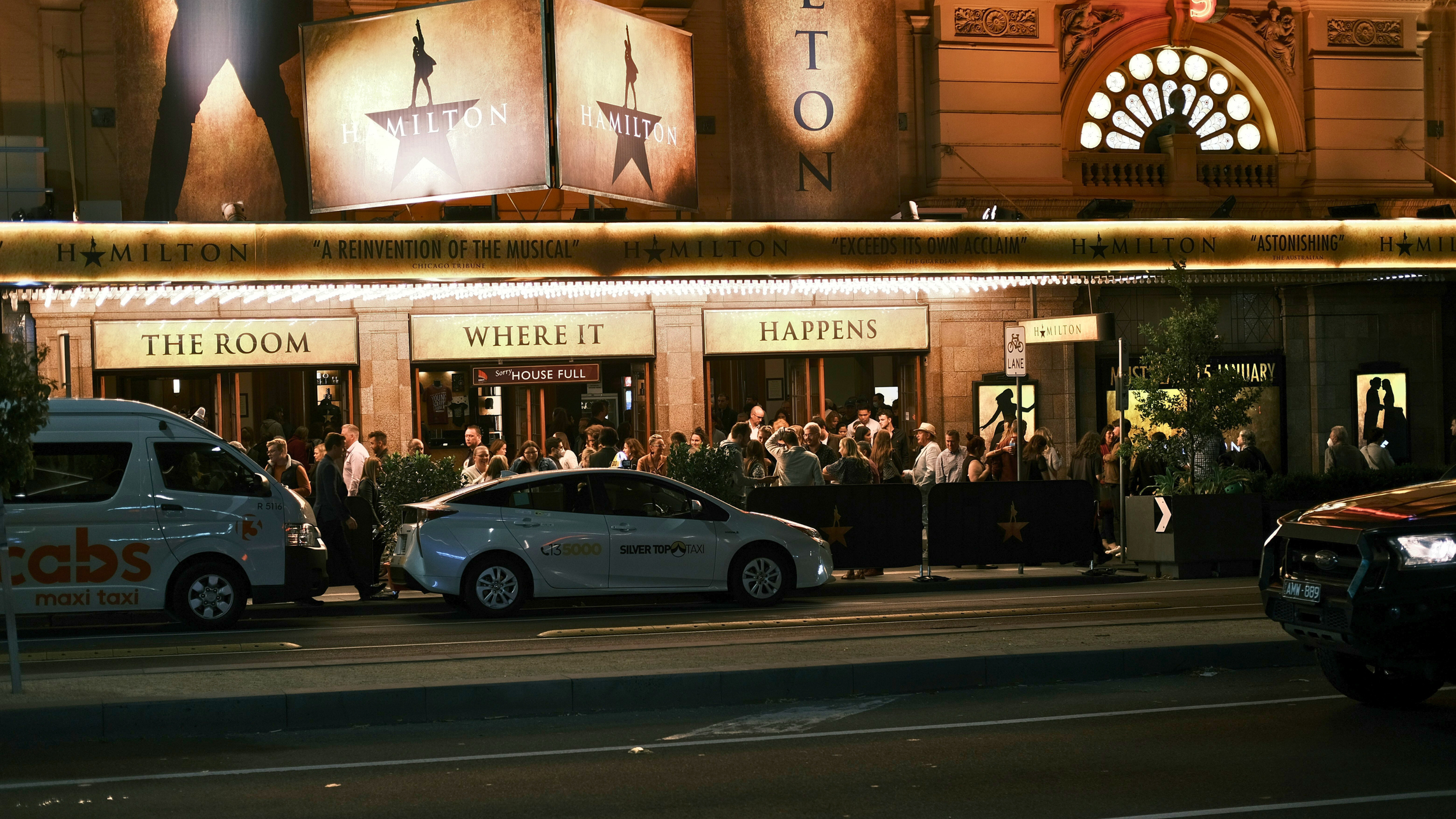
Hamilton is the clearest example in recent performing arts history. Believe it or not, Lin-Manuel Miranda and the original cast used to perform five-minute excerpts outside the theater for fans waiting in the ticket lottery line in the early days. It seeded the word of mouth before it had anywhere to go. Once the right people were talking (loudly, publicly, and on every platform) the celebrities followed, the press followed, and the rest is a $1,000+ resale ticket market.
Three Things That Have to Be True for a Trend to Spread
Motivation: There's something in the trend that connects to someone's interests, their identity, or something they're already quietly thinking about. This feeling arrives emotionally first. Their rational justification for opening their wallet comes later.
Access. People have to feel like they can actually get there, literally. A show that requires 45 minutes of highway driving and $30 in parking likely already lost people who were on the fence.
Your ticket price matters, but it's rarely the whole story. Childcare, dinner out, and the mental overhead of planning a night out adds up fast.
And then there's a subtler barrier: belonging. If attending your show feels like it requires a secret password or fluency in a language newcomers don’t speak, most people bounce. Arts organizations fall into this trap constantly with insider language, hyping up unknown artist names, and season descriptions written for people who already love the art form. It makes people feel like the show isn’t for them.
Opportunity. People have to see the door in the first place. Opportunity means more than a ticket being available. It means your organization is visible, relevant, and easy to say yes to. Awareness isn't a nice-to-have. It's the prerequisite for everything else.
When all three are present, adoption accelerates. When even one is missing, even great work goes unseen.
The Window Problem. Or Why Most Organizations Miss It
Trends move through a population on their own timeline. Their popularity usually starts on the fringes and rarely happens overnight. By the time something feels obvious, the early wave has already passed and the market is crowded with everyone who just noticed.
And you're not competing with other arts organizations for a piece of that wave. You're competing with the news, gas prices, work stress, busy schedules, and whatever's new on Netflix for your audience's time, money, and mental energy. The bar to earn a yes has never been higher.
You've probably seen the Rogers Adoption Curve before.
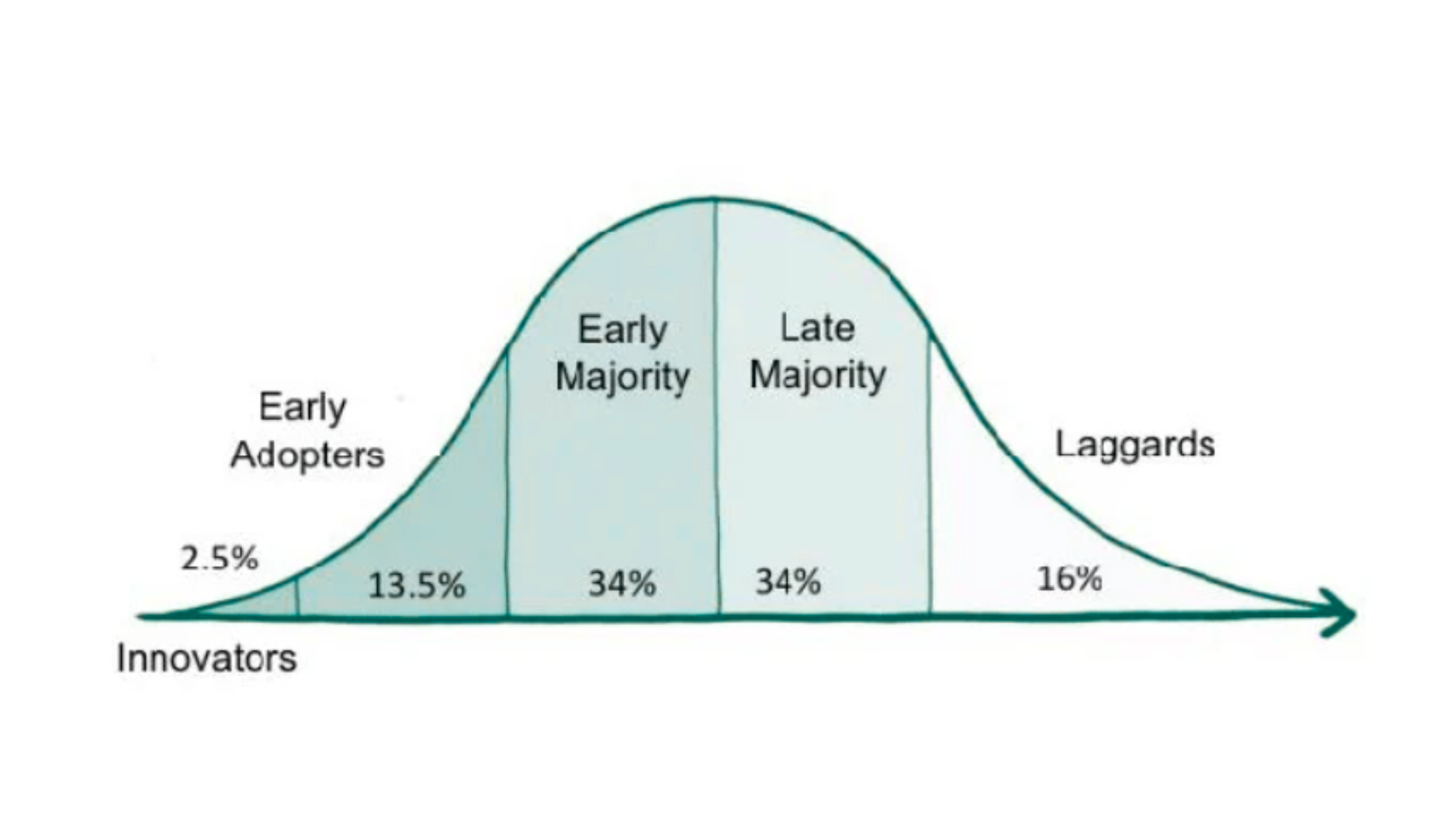
The idea is straightforward: trends move from a small group of early adopters outward through the population, with each wave needing less convincing than the last. Innovators take the risk first. Early adopters follow when there's enough social proof. The early majority arrives once it feels safe. By the time the late majority shows up, the moment that made the thing exciting has largely passed.
The organizations that benefit most move during the early adopter window or when the conversation is just beginning, the audience is hungry, and you're not one of fifteen organizations all saying the same thing at the same time.
Most arts organizations — and everyone else for that matter — wait until a trend is obvious. Which means they move with the majority and have more competition, smaller opportunity, and a lot more work for a lot less reward.
Sources & Further Reading
-
Kemp, E. & Poole, S.M. (2016). Arts Audiences: Establishing a Gateway to Audience Development and Engagement. The Journal of Arts Management, Law, and Society, 46(2), 53–62. DOI: 10.1080/10632921.2016.1150929
McCarthy, K.F. & Jinnett, K. (2001). A New Framework for Building Participation in the Arts. RAND Corporation, MR-1323-WRDF. Available at: rand.org/pubs/monograph_reports/MR1323.html
Wejnert, B. (2002). Integrating Models of Diffusion of Innovations: A Conceptual Framework. Annual Review of Sociology, 28, 297–306.
Rogers, E.M. (1976). New Product Adoption and Diffusion. Journal of Consumer Research, 2(4), 290–301. DOI: 10.1086/208642
-
Holt, D.B. (2003). What Becomes an Icon Most? Harvard Business Review, 81(3), 43–49.
-
Bias, E. (2020). The Timeliness of Hamilton: An American Musical. Popular Culture Studies Journal Special Issue: Independent Scholar Showcase, 8(2.5), 131–149.
Galella, D. (2018). Being in "The Room Where it Happens": Hamilton, Obama, and Nationalist Neoliberal Multicultural Inclusion. Theatre Survey, 59(3), 363–385. DOI: 10.1017/S0040557418000303
-
Billboard (2014, December 18). What the U.S.-Cuba Breakthrough Could Mean for Music. Retrieved from billboard.com
Galerie Magazine. Behind Cuba's Rising Contemporary Art Scene. Retrieved from galeriemagazine.com
Cambridge Core (2019). Before the Thaw: The Transnational Routes of Cuban Popular Culture. Latin American Research Review. DOI: 10.1017/lar.2019.6
Cambridge Core (2020). Music, Politics, and the Liminality of the Havana Jazz Plaza Festival in the Obama Era. Journal of the Society for American Music. DOI: 10.1017/S1752196319000690
Obama White House Archives (2014, December 17). President Obama Delivers a Statement on Cuba. Retrieved from obamawhitehouse.archives.gov
FAQs
-
Identifying trends early means looking beyond your immediate industry. Follow what's happening in adjacent spaces — popular culture, public health conversations, economic shifts, and national mood. Pay attention to what people are anxious about, what they're hungry for, and what stories are starting to surface in mainstream media before they become headlines. Fads are your early warning system — when you see one spike, ask what larger tension it's pointing to. The organizations that spot trends early aren't necessarily smarter. They're paying attention to a wider slice of the world and asking a different question: not "what are other arts organizations doing?" but "what is our audience already moving toward?"
-
A trend is a long-term shift in behavior or culture driven by a genuine underlying need — think the loneliness epidemic, the mental health conversation, or the hunger for in-person community. A fad is a short, intense burst of popularity driven by novelty that disappears as quickly as it arrived. The important distinction: fads are usually features of a larger trend. Sourdough baking was a fad. The need for comfort and control during uncertainty was the trend underneath it.
-
Trends spread because people are social decision-makers. When someone is unsure whether something is worth their time or money, they look to people like them for cues. The more familiar an idea feels, the faster it moves through a population. Three things have to be true for a trend to gain traction: people have to want it (motivation), feel like they can access it (access), and know it exists (opportunity). When all three are present, adoption accelerates.
-
By the time a trend feels obvious, the early wave has already passed. Most organizations wait until something is undeniable before acting — which means they move with the late majority, facing more competition, smaller opportunity, and significantly more effort for less reward. The organizations that benefit most are the ones that recognize the signal early, before the market gets crowded.
-
Start by paying attention to what's happening culturally — not just what's on your current season. Look for the tension underneath the fad, not just the fad itself. Ask whether your programming or marketing has an authentic connection to what people are already feeling, worrying about, or hungry for. When the connection is real and the timing is early, your organization can be in the right place when the wave arrives — rather than scrambling to catch up after it breaks.
-
The Rogers Adoption Curve describes how trends move through a population in waves — from innovators and early adopters through the early and late majority. Each wave requires less convincing than the last. For arts organizations, the practical implication is clear: the earlier you move, the less competition you face and the more opportunity you have to own the conversation. Waiting until something feels safe means arriving late to a crowded market.
